
What is tuberculosis (TB)?
Tuberculosis (TB) is caused by germs that are spread through the air when a person with infectious TB coughs or sneezes. Anybody nearby is at risk of breathing in these air-borne TB germs into their lungs. A tuberculin test is the first test given to check for TB.
When TB germs attack the lungs and grow, they cause damage to the lungs. People with TB germs growing in their lungs can spread TB germs to other people. TB can also affect other parts of the body like glands, bones, kidneys, and reproductive organs, although TB is not likely to be spread to others from tuberculosis in these parts of your body. A person with active TB disease must have treatment to cure the disease and prevent the spread to other people.
Contact us for a tuberculosis skin test at 250-370-2366 (Tests are started on Mondays and Tuesdays and finished on Wednesday or Thursday). TB Tests are $70.00
We require two appointments, one for the initial test and a minimum of 48 hours to a maximum of 72 hours later to read the test result. **You must return for the follow up visit given to you or the TB test is void and will need to be restarted at an additional cost**
Please specify if you require a 2- step TB test. A 2 step TB test requires a total of 4 different appointments; the initial test and a minimum of 48 hoursrs later to read the test result and then same process repeated 1-3 weeks after the first test is planted.
How is the test done?
A tuberculin test is done to rule out TB infection. This is a two-part test. In the first part, a small needle injects a small amount of a harmless test substance under the first layer of skin on your forearm.
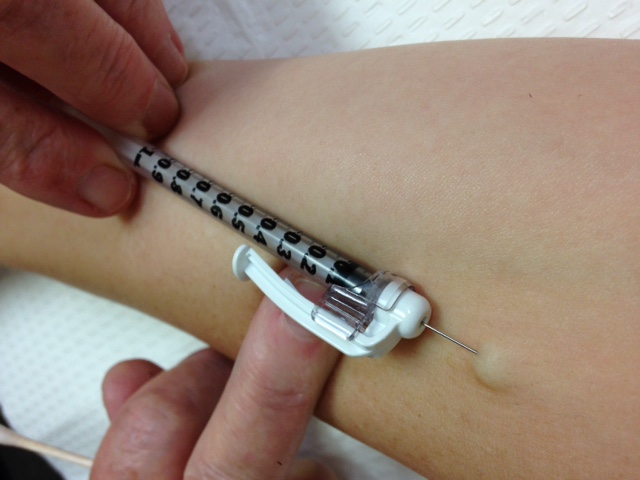
Although there is minimal risk, you will be asked to stay in the clinic for 15 minutes following the skin test to see if you experience any allergic reaction. The reaction you may get from this is a raised area where the needle was given. If this area gets itchy, do not scratch it. Instead apply cold (e.g., a cloth) to this area.
The second part of the test is read a minimum of 48 hours or a maximum of 72 hours later. You must return to see the nurse to have your reaction ( if any) measured. If the TB test is positive you will be referred to the TB clinic at the Royal Jubilee Hospital for a chest x-ray.