

|

Severe flu season expected for 2014-15
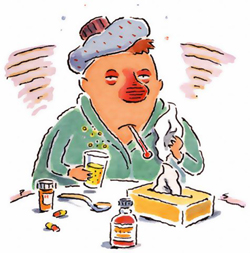
flu

This year’s flu season has started early, the present  strains circulating are consisting of a mutation strain of A(H3N2). Canada, Europe and the US have reported almost exclusively the circulation of influenza A(H3N2), flu seasons dominated by this strain tend to be severe.  The current vaccine strain in this year’s flu vaccine (A/Texas H3N2) will not protect against this mutated strain.

Should you still get the flu shot? Yes.  The flu vaccine still provides protection against the other strains and overall significant benefit.

Vaccination is the best way to protect yourself as well as your children and elderly family’s health.

Travellers are at high risk for influenza.  Ensure you are using personal protective measures including proper hand hygiene to keep yourself protected. Have you had your flu shot?  Are you up to date on recommended vaccination for your trip abroad?  It is recommended to seek if travel health advise 4-6 weeks (if possible) before travel.  Leaving short notice?  it is still recommended to see a travel health provider to ensure you are protected.  Contact the Nova Travel Clinic today!


Similar Posts

  • Nigeria: Lassa Fever

    According to press sources, 2 cases of Lassa fever (in previously non-endemic River State) have been reported so far this year. Official confirmation and laboratory testing is pending. Travelers are advised to avoid contact with mice and rats (including their excreta) in rural areas.

  • Flooding in Thailand

    From July to November 2011, widespread flooding (including flash flooding) and landslides occurred in the central, northeast and northern regions of Thailand. Some southern regions have been experiencing flooding since November 2011. More than 690 deaths have been attributed to the flooding, many of which were caused by drowning or electrocution. Flood waters continue to…

  • Chikungunya confirmed in Belize

    Since November 21, 2014 the Pan American Health Organization has confirmed 3 locally acquired cases of chikungunya fever.  The cases were reported from the city of Belmopan. Travellers are advised to practice insect precautions.  Chikungunya is spread through the bite of an infected mosquito; this is a daytime biting mosquito. Travellers are advised to seek…

  • Cumulative Flying Time and the Risk for Venous Thromboembolism

    MacCallum PK, Ashby D, Hennessy EM, et al. Cumulative flying time and risk of venous thromboembolism. Br J Haematol 2011. doi:10.1111/j.1365-2141.2011.08899.x. Conclusion: Compared with not flying, cumulative flying times > 12 h within the previous 4 weeks and > 4 h in a single leg are associated with three-fold and two-fold increases, respectively, in the…

  • Measles

    The Public Health Agency of Canada released a public health notice on measles on March 26th, 2013.  Two Canadians, one from Ontario and one from New Brunswick,  travelled outside of Canada to Mexico and became infected with measles; they were not previously vaccinated.  It is likely that the individuals contracted the illness from another traveler in the…